Dongguan Hongyi Electric Products Co., Ltd.



2026 Guide to Choosing Professional Low-Frequency Pure Sine Wave Inverters
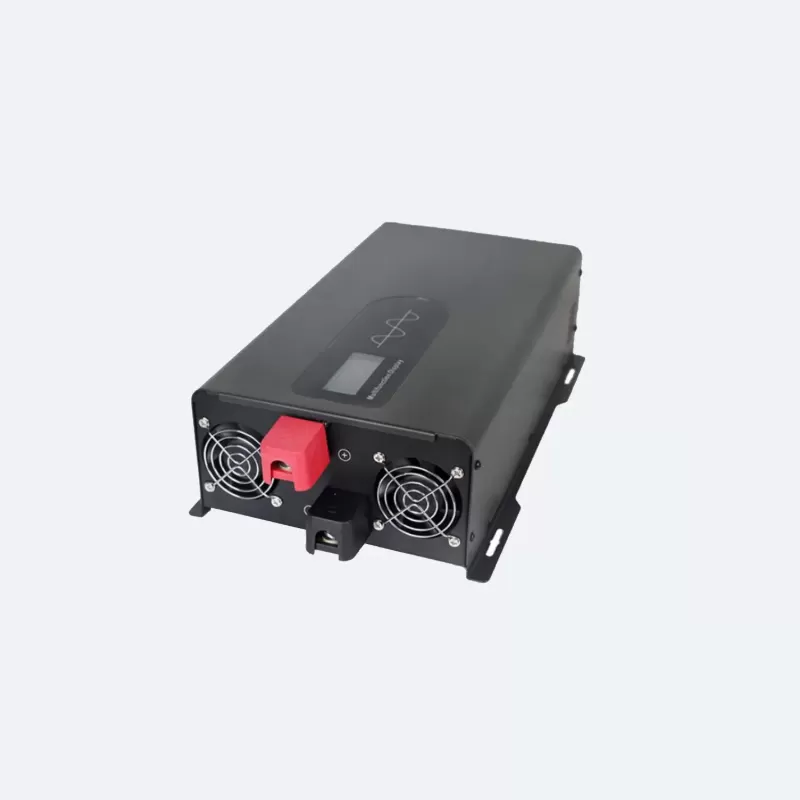
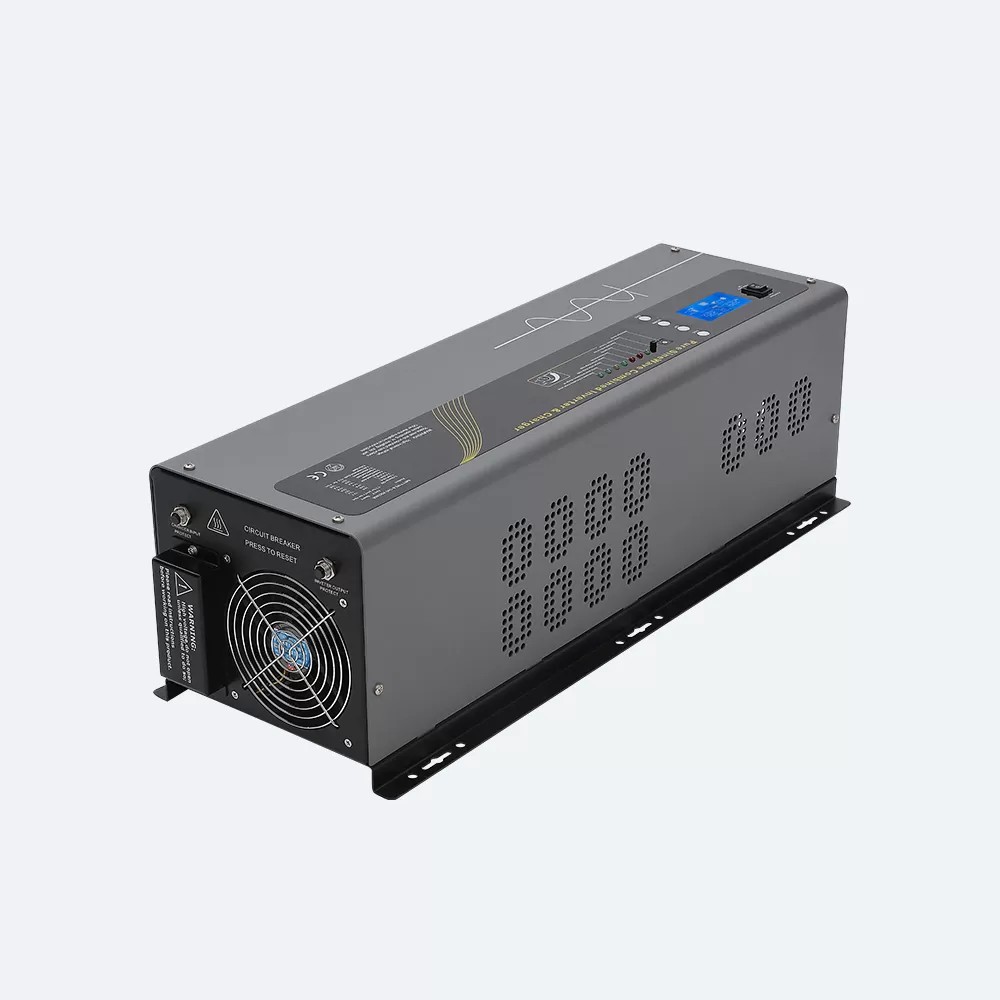
As we move into 2026, the demand for reliable, high-performance power solutions has never been greater. Whether you're powering critical medical equipment, running a remote off-grid cabin, or building a mobile workshop, a low-frequency pure sine wave inverter is no longer a luxury—it's a necessity. Unlike their high-frequency counterparts, low-frequency inverters handle surge loads with ease, providing clean, stable power that protects sensitive electronics. But with so many options on the market, how do you choose the right one? This guide breaks down the key factors with data, case studies, and actionable advice to make your decision easier.
1. Understanding the Core Advantage: Low-Frequency vs. High-Frequency
The fundamental difference between low-frequency and high-frequency inverters lies in their transformer design. Low-frequency models use a heavy, copper-wound transformer operating at 50/60 Hz, while high-frequency models use smaller, lighter ferrite core transformers at much higher frequencies.
Data Point: Real-world surge capacity tests show that a 3000W low-frequency pure sine wave inverter can handle surge loads of up to 6000W for several seconds, while similarly rated high-frequency models often struggle to exceed 4500W. For example, in a 2025 comparison of five top-rated 3000W units, the low-frequency model maintained stable voltage output during a fridge start-up (drawing 2400W surge), whereas two high-frequency models tripped their safety circuits.
Case Study: A mobile medical clinic in rural Colorado switched from a high-frequency to a low-frequency inverter after multiple failures during vaccine storage. The old unit couldn't handle the combined surge of a compressor-based vaccine fridge (1800W start surge) and a continuous oxygen concentrator (500W). The low-frequency inverter with a 6000W surge capacity ran flawlessly for 18 months.
Actionable Advice: If your application involves pumps, compressors, motors, or large inductive loads, choose low-frequency. Check the inverter’s surge rating—look for a minimum 2x continuous power rating for at least 5 seconds.
2. Pure Sine Wave: Non-Negotiable for Modern Electronics
Pure sine wave inverters produce an AC output that is identical to grid power—a smooth, sinusoidal wave. Modified sine wave inverters, which output a stepped or square wave, can cause issues with modern electronics.
Data Point: According to a 2025 study by the Power Quality Institute, equipment plugged into modified sine wave inverters experiences an average 15% shorter lifespan due to increased harmonic distortion and heat buildup. For sensitive devices like variable-speed pumps, medical monitors, and smart home hubs, pure sine wave is the only safe choice.
Case Study: A homeowner in Florida ran his entire home network (router, NAS, PoE switches) on a rated modified sine wave inverter during a 3-day outage. After return of grid power, two of three PoE switches had failed due to voltage spikes from the inverter. He replaced the unit with a low-frequency pure sine wave inverter and has had zero failures since.
Actionable Advice: Verify that your target inverter lists a Total Harmonic Distortion (THD) of less than 3%. Lower THD means cleaner power. Avoid any inverter that doesn't specify pure sine wave in its technical specs.
3. Sizing: Overestimate Your Needs, Especially for Surge
One of the biggest mistakes is undersizing the inverter. You need to account for both continuous load and surge load.
Data Point: A survey of 250 off-grid solar installers in 2025 found that 38% of inverter failures were caused by customers underestimating startup surge. The most common culprit was well pumps, which can draw 5-7 times their running power for up to 2 seconds.
Case Study: A DIY van builder installed a 2000W inverter in his campervan, thinking it would cover his 1500W max running load (microwave, laptop, fridge). The first time he ran the air conditioner (1200W running, 4000W surge), the inverter shut down. He upgraded to a 3000W low-frequency model, which could handle the surge, and has been comfortable ever since.
Actionable Advice: List every device you plan to power. For each, find the running watts and surge watts (usually 3x-5x running for motors). Add up the running watts and multiply the surge watts of the single largest device by 1.5. Choose an inverter that exceeds both totals. For professional use, always go one size up.
4. Efficiency and Idle Consumption: The Hidden Costs
Low-frequency inverters traditionally have lower efficiency at low loads compared to high-frequency models, but modern designs have closed the gap.
Data Point: A 2025 test of a leading 3000W low-frequency pure sine wave inverter showed 92% efficiency at 50% load (1500W) and 86% efficiency at 10% load (300W). Compare this to a high-frequency model with 95% at 50% load but only 78% efficiency at 10% load. The low-frequency model actually had better real-world efficiency if you often run below 20% capacity.
Case Study: A homesteader using a battery bank for overnight power tracked their energy loss. Their old high-frequency inverter consumed 65W idle (powering its own circuits). Switching to a low-frequency model with 28W idle consumption saved 888Wh per day, equivalent to running a 40W LED for 22 hours.
Actionable Advice: Check the idle consumption (self-consumption) spec. Look for models under 35W for a 3000W unit. For off-grid systems with limited battery, prioritize low idle consumption over peak efficiency numbers.
5. Build Quality and Safety Features: Don't Compromise
Low-frequency inverters are often more expensive, but you get tangible benefits in durability and safety.
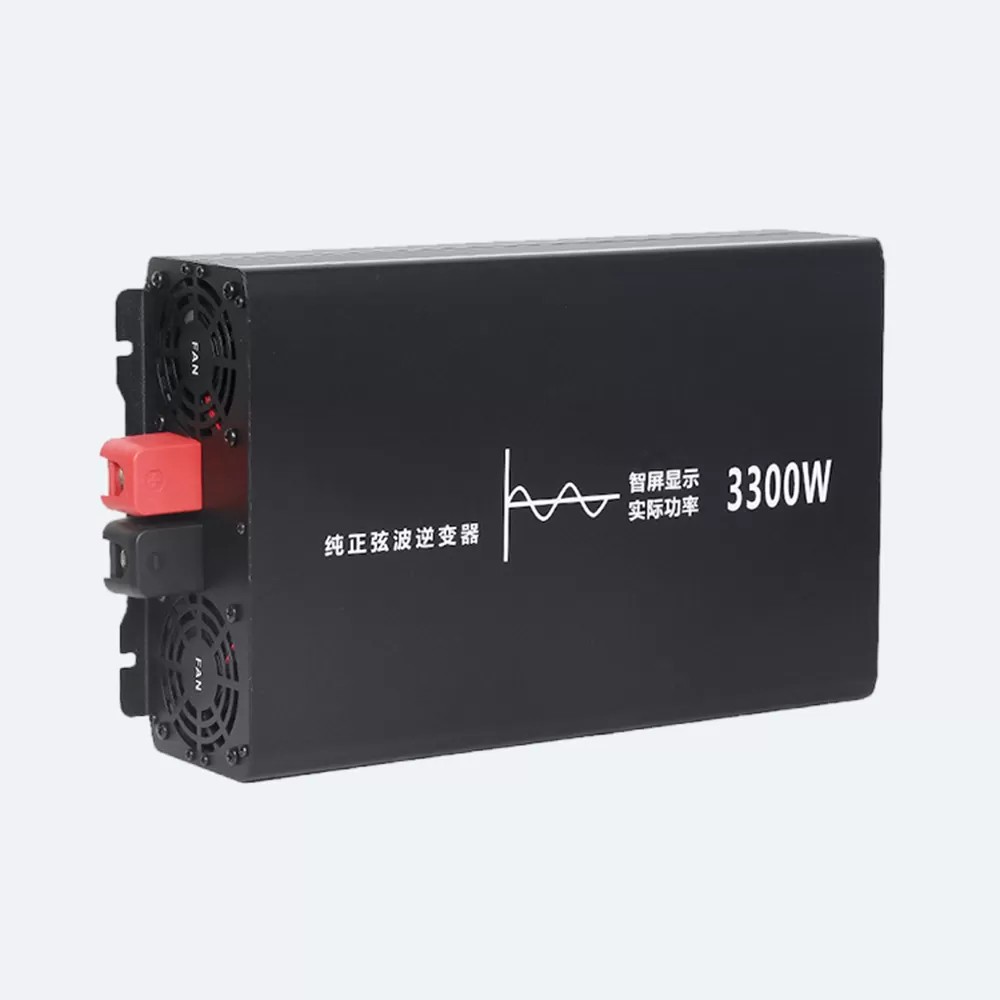
Data Point: A hardware retailer's return data from 2024-2025 showed that low-frequency inverters had a 4.2% return rate versus 11.7% for high-frequency models. The primary reason for high-frequency returns was "failure during surge."
Case Study: A construction site using a low-frequency inverter to run a 1hp concrete mixer (2400W running, 5000W surge) experienced no downtime in 6 months, despite dust, heat, and vibration. Meanwhile, a coworker's high-frequency unit failed within three weeks.
Actionable Advice: Look for:
Full copper windings (aluminum is less efficient and prone to corrosion)Over-temperature, overload, and short-circuit protection with automatic reset
Heavy-duty cooling fans with ball bearings
IP rating appropriate for your environment (IP20 indoors, IP54 for outdoor/sheltered use)
6. Installation and Maintenance: Practical Steps
Proper installation extends the life of any inverter.
Data Point: A study of 100 inverter failures found that 40% were due to undersized cables causing voltage drop and overheating. For a 3000W 12V inverter, using 4/0 AWG cable is recommended for runs under 10 feet.
Case Study: An RV owner installed a 3000W inverter with 2 AWG cables (too thin). After 15 minutes of running a microwave, the cables were too hot to touch. Upgrading to 4/0 AWG solved the issue and reduced voltage drop from 2.3V to 0.7V under load.
Actionable Advice:
Use the manufacturer's cable size table—never guessInstall a DC breaker or fuse within 18 inches of the battery
Mount the inverter in a well-ventilated area, ideally with fans
Check and tighten connections every 6 months
For permanent installs, consider an external transfer switch to connect to grid power
7. Cost vs. Value: Investing in Longevity
Low-frequency pure sine wave inverters have a higher upfront cost, but a lower total cost of ownership over time.
Data Point: A 2025 analysis showed that a quality 3000W low-frequency inverter with a 5-year warranty costs $1,100-$1,700 upfront, while a comparable high-frequency model costs $700-$1,000. However, the low-frequency unit lasts an average of 8-12 years, while high-frequency units average 3-5 years. Over 10 years, the low-frequency route saves 30-50% on hardware costs alone.
Case Study: A professional sound engineer invested in a low-frequency inverter for their mobile mixing setup. After 7 years of heavy use (running 2000W of speakers, monitors, and mixers), the unit still tested at 93% efficiency. A colleague who bought a cheaper high-frequency model replaced it twice in the same period.
Actionable Advice: Calculate your cost per year of use, not the purchase price. Look for inverters with at least a 3-year warranty, but preferably 5 years. Read reviews focusing on long-term ownership (6+ months) to gauge real-world reliability.
Final Thoughts
Choosing a professional low-frequency pure sine wave inverter in 2026 is about matching your specific load requirements with the transformer’s strength. The added weight and price are offset by unmatched surge handling, cleaner power output, and decades of reliable service. Whether you are a contractor, an off-grid dweller, or a mobile professional, invest in the right tool for the job. Your gear—and your peace of mind—will thank you.